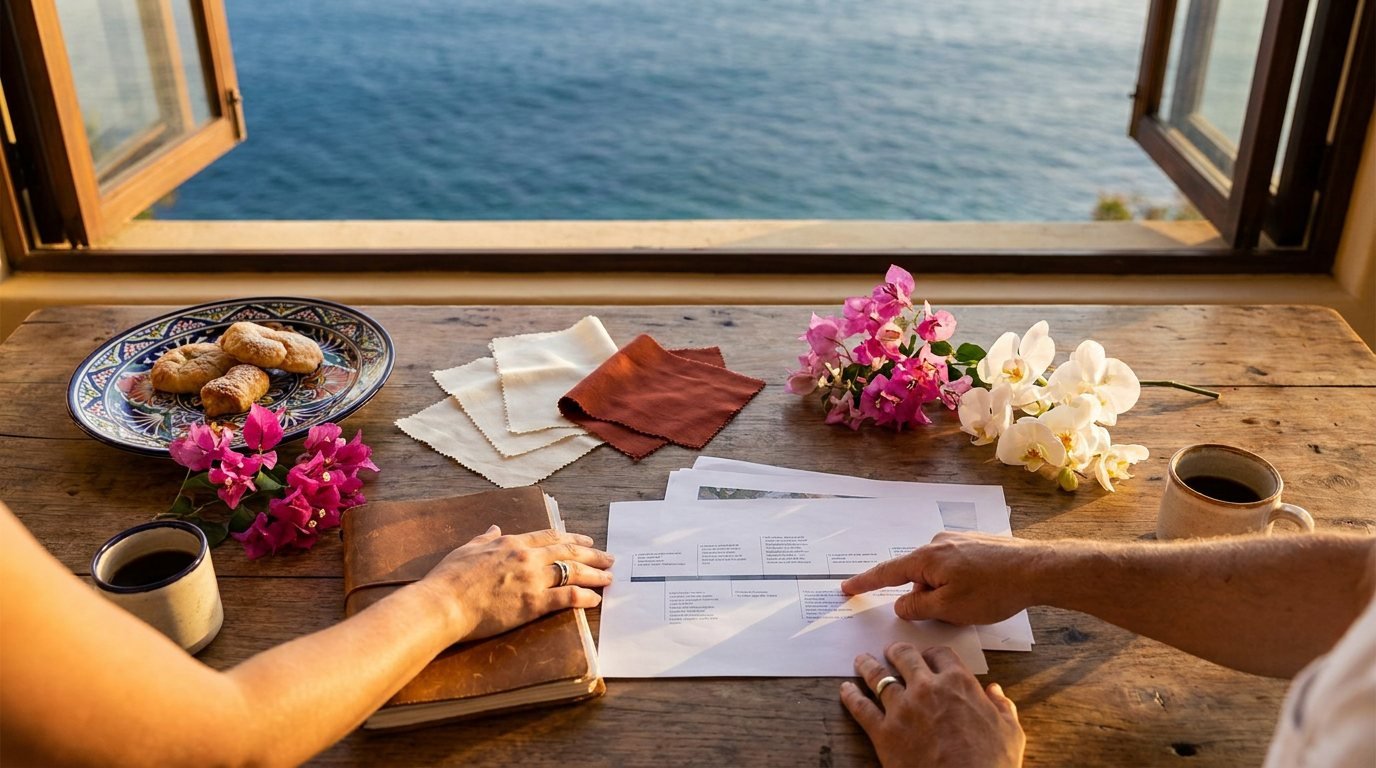
You found the villa on the cliff. You've seen the sunset over Banderas Bay in a hundred photos. Now the real work begins — and if you don't speak Spanish, you're about to discover that the florist, the mariachi, the rental company, the civil registry and the villa's housekeeper all do. That gap is exactly what a bilingual wedding planner in Puerto Vallarta closes.
This guide explains what a bilingual planner actually does on a destination wedding, why the language piece is worth more than it looks, what to ask before you hire one, and how weddings on the bay tend to unfold — from the welcome dinner to the recovery brunch. It's written from our side of the table: PVR Private Chef offers a bilingual wedding planner service in English and Spanish and cooks the wedding, so we see both halves of the job every weekend.
What "Bilingual Wedding Planner" Really Means
Plenty of planners in Mexico list "English spoken" on their website. Bilingual is a different thing. A truly bilingual wedding planner can:
- Negotiate in Spanish, report in English. Vendor pricing in Puerto Vallarta is often better when the conversation happens in Spanish, between locals. Your planner gets the local rate and translates the quote for you line by line.
- Read the contract you're signing. Villa rental agreements, DJ contracts and rental deposits are usually written in Spanish. Your planner explains the cancellation terms, the corkage rule and the "hora extra" fee before you sign.
- Brief the crew in their own language. On the day, the setup team, the bartenders, the security guard at the gate and the boat captain all get instructions in Spanish. Your guests get them in English. Nothing gets paraphrased twice.
- Handle the paperwork. Civil ceremonies in Jalisco and Nayarit are performed in Spanish with translated, apostilled documents. A bilingual planner knows the registry office, the judge's calendar and which translations must be certified.
- Host both families. Many destination weddings here mix an English-speaking side with a Spanish-speaking side. A bilingual planner writes the toasts order, the ceremony program and the signage so that both sets of grandparents feel included.
If you want the short version: a bilingual planner is the one person on your wedding who can talk to everyone.
Why Puerto Vallarta Weddings Need One More Than Most
Cancún and Los Cabos are built around large resort wedding departments, where the hotel controls almost every vendor. Puerto Vallarta and the Riviera Nayarit are different: the best weddings here happen in private villas, on beach clubs, in boutique haciendas and on yachts. That freedom is the whole appeal — and it means you assemble your own team of independent, local, mostly Spanish-speaking vendors.
Add the geography. A wedding weekend on the bay may involve a welcome dinner in the Zona Romántica, a ceremony at a villa in Conchas Chinas, transport for 60 guests through downtown traffic, a boat to the Marietas Islands the next morning and a brunch in Nuevo Vallarta. Every one of those pieces involves a driver, a captain, a security gate or a permit — and a phone call in Spanish. Someone has to make those calls, and it shouldn't be you on your wedding morning.
What a Bilingual Planner Handles, Step by Step
1. Venue & villa selection
A local bilingual planner knows which villas actually allow amplified music after 10 pm, which ones have a generator (yes, that matters in September), which beach clubs close to the public for a private event and what the real capacity is once you add a dance floor. They read the fine print with the villa manager — in Spanish — and flag the extra fees: event fee, security deposit, staff overtime, cleaning.
2. Vendor sourcing and translation
Florists, photographers, mariachi and banda groups, DJs, officiants, hair and makeup, lighting, rentals, transportation. Your planner builds the shortlist, gets Spanish-language quotes, translates them into a single comparison sheet and manages deposits and payment schedules — usually in pesos, which also protects you from exchange-rate surprises.
3. Legal or symbolic ceremony
If you want a legally binding marriage in Mexico, you'll deal with the Registro Civil, a Spanish-speaking judge, apostilled birth certificates, certified translations and, depending on the municipality, a blood test. Many couples instead marry legally at home and hold a symbolic ceremony here. A bilingual planner walks you through both routes and, if you choose the legal one, books the judge and prepares the file.
4. The wedding-weekend timeline
Destination weddings are three-day events. A good planner produces one master timeline in English for you and your guests and one operational version in Spanish for the crew, minute by minute: when the rental truck arrives, when the chef's team fires the first course, when the boat leaves the marina. The two documents have to match. Ours do, because the same person writes both.
5. Guest logistics
Airport pickups, hotel blocks, WhatsApp groups for guests (in English), shuttle schedules, welcome bags with a bilingual itinerary, and the inevitable "my uncle missed the shuttle" call at 4:45 pm. The planner solves it in Spanish with the driver and confirms it in English with your uncle.
6. Day-of coordination
On the day, the planner is at the venue before the first vendor and leaves after the last rental is loaded. They cue the ceremony, manage the toasts, coordinate the cake, run the send-off and handle anything unplanned. You don't hear about most of it.
Where the Menu Fits — and Why We Plan and Cook
Here's what most couples learn the hard way: the reception dinner is the largest single cost of the wedding, the piece guests remember most, and the one where language mistakes hurt the most. Allergies written in English get lost in a Spanish kitchen. "Family-style" means something different to a Mexican banquet team than to a Californian bride. The tasting is scheduled in one language and executed in another.
That's why PVR Private Chef built bilingual wedding planning around the kitchen rather than the other way around. Our wedding dinner service is run by the same bilingual team that plans the weekend, which means:
- Your dietary map is collected in English from your guests and cooked from in Spanish by our chefs — one document, no re-translation.
- The tasting happens with the planner and the chef at the same table.
- The menu, the timeline and the bar are one plan, not three vendors' plans stapled together.
- Welcome dinner, rehearsal dinner, reception and recovery brunch are all cooked fresh on-site at your villa, estate or beach club — no reheated banquet food trucked in.
Couples who already have a planner they love can still book us for the food alone. But if you're starting from zero and English is your first language, one bilingual team for planning and catering removes the single most common failure point on a Puerto Vallarta wedding.
How to Choose a Bilingual Wedding Planner in Puerto Vallarta
Ask these on the first call. The answers tell you almost everything.
- "Can we do this call in Spanish for a minute?" If you or someone with you speaks Spanish, switch. Fluency shows in thirty seconds.
- "Who talks to the vendors — you, or an assistant?" You want the person who negotiates to be the person you trust.
- "Show me a timeline from a real wedding." Look for two versions: one for guests, one for crew. Look at the minute-level detail around dinner service.
- "How do you handle guest allergies with the kitchen?" If the answer is "we send the caterer a list", ask how it gets translated and who checks it on the day.
- "What happens if it rains?" Puerto Vallarta's rainy season runs June to October. A planner who has run a September wedding here will have a specific answer: tent vendor, indoor fallback, timing of the decision.
- "Are you paid by vendors?" Referral commissions are common. Not disqualifying, but you want to know.
- "Can I speak to a couple you worked with who didn't speak Spanish?" That reference will tell you how the language gap was handled in practice.
Sample Wedding Weekend on Banderas Bay
A typical three-day plan for 40 to 80 guests staying between Puerto Vallarta and Nuevo Vallarta. Yours will be tailored, but this shows how planning and catering interlock.
Friday — Welcome dinner
Relaxed taco-and-ceviche night on the villa terrace or a private beach club. Bartender for margaritas and palomas, a small trio or acoustic set, guests meet each other, planner confirms shuttle times for Saturday in the guest WhatsApp group. Chef's team cooks live: pastor, grilled fish tacos, aguachile, esquites, churros.
Saturday — Ceremony and reception
Hair and makeup at the villa from midday. Ceremony at golden hour (around 6 pm in winter, 7:30 pm in summer) on the lawn or beach. Cocktail hour with passed canapés while photos happen. Plated or family-style dinner — snapper, short rib, a plant-based main, custom cake and a dessert table. First dance, toasts (planner cues them in the right order in both languages), band or DJ, late-night bites at midnight.
Sunday — Recovery brunch or boat day
Chilaquiles, fruit, fresh juices, mimosas and coffee at the villa — or a catered yacht morning on the bay if the group is up for it. Our yacht dining service handles the food on board; the planner handles the marina, the captain and the timing.
Timing and Seasons in Puerto Vallarta
High season (November–April): dry, 24–30 °C, sunset ceremonies with reliable skies. Book the planner 9–12 months out; popular villas and photographers go first.
Shoulder (May, October): warmer, fewer tourists, better vendor availability, still mostly dry. Great value for villa weddings.
Rainy season (June–September): hot and humid with dramatic afternoon storms that usually clear by evening. Beautiful green hills, lower prices, but you need a planner with a real rain plan and a menu that tolerates a 45-minute delay.
Legal Wedding vs. Symbolic Ceremony in Mexico
Because couples ask every time: a legal civil ceremony in Jalisco or Nayarit requires passports, apostilled birth certificates with certified Spanish translations, tourist cards, witnesses with ID and, in some municipalities, a blood test done locally days before. The judge performs the ceremony in Spanish; your planner arranges an interpreter or a bilingual officiant to run the vows in English alongside. The certificate is then apostilled for use at home.
A symbolic ceremony has no paperwork: you marry legally at home before or after and celebrate here with a bilingual officiant, your own vows and whatever traditions you want — a lazo, arras, a sand ceremony, a Huichol blessing. Roughly four out of five destination couples choose this route. A bilingual planner explains both honestly and never sells you the complicated one if you don't need it.
Villa, Beach Club or Yacht?
Villa weddings give you privacy, your own kitchen for the chef team and control of the timeline. Look in Conchas Chinas, Mismaloya, Punta Mita and the hills above Bucerías. Our villa dining service can also feed the wedding party all weekend, not just at the reception. If you're still looking for a house, PV Rents and Aria Ocean Rentals handle event-friendly properties on both sides of the bay.
Beach clubs (Nuevo Vallarta, Bucerías, Punta Mita, Sayulita) handle bigger groups, offer built-in bars and sound and put your feet in the sand. Your planner negotiates the buyout and the noise curfew.
Yacht weddings suit 10 to 40 guests: ceremony at anchor off Los Arcos or the Marietas, dinner on deck at sunset. See our Punta Mita yacht charter guide and, for a charter with a solid crew, Fish and Tours.
Beyond the Wedding: Bachelorette, Spa Day and Guest Activities
A bilingual planner is also the person who fills the rest of the week for your guests. Bachelorette weekend in the villa? We wrote a full bachelorette private chef guide. Bridal party spa morning? Day Spa Vallarta lists the spas that come to the villa. Guests with a free day? Tours Vallarta and PV Tours cover zip-lines, whale watching and Marietas trips, and All Inclusive Puerto Vallarta is the easy answer for relatives who'd rather stay at a resort.
What to Send Us to Get a Wedding Quote
You don't need everything figured out. A first message with these points lets our bilingual wedding planner reply with a real proposal within 24 hours:
- Date (or month) and how flexible you are
- Guest count, and how many speak Spanish vs. English
- Venue if you have one — or "help us find a villa"
- Which events you want: welcome dinner, rehearsal, reception, brunch
- Legal or symbolic ceremony
- Style: plated fine dining, family-style, taco fiesta, mix
- Any allergies, kids, and must-haves (mariachi, fireworks, a specific tequila)
Read more about our bilingual wedding planner service, use the quote builder on our home page — every field is optional — or write to us on WhatsApp in whichever language you're more comfortable in. We'll answer in the same one.
Frequently Asked Questions
A bilingual wedding planner runs your destination wedding in both languages: they source and negotiate with local vendors in Spanish, translate contracts and quotes for you, handle Mexican civil or symbolic ceremony paperwork, build a timeline both your English-speaking guests and the Spanish-speaking crew can follow, and coordinate the day itself so nothing is lost in translation.
A venue coordinator works for the venue and only manages what happens on the property. A bilingual wedding planner works for you — across every vendor, the welcome dinner, transportation, the rehearsal, guest logistics and the reception menu. In Puerto Vallarta most florists, musicians, rental companies and civil registry offices operate in Spanish, so having someone who speaks both languages fluently saves money and mistakes.
For high season (November to April) book 9 to 12 months ahead so the planner can secure the best vendors and dates. Smaller villa weddings and elopements can come together in 3 to 6 months. Contact us early even if your date is flexible — the planner can tell you which weekends are still open.
Yes. Legal marriages in Mexico are performed by the civil registry (Registro Civil) in Spanish, and foreigners need apostilled and translated documents, blood tests in some states and a local judge. A bilingual planner coordinates the paperwork, the certified translations and the judge, or helps you set up a symbolic ceremony in Mexico after a legal ceremony at home.
It depends on the scope — day-of coordination, partial planning or full planning — plus guest count and how many events you host over the weekend. We quote each wedding individually after a short call. Send your date, venue and headcount through our quote builder and we'll reply with a proposal.
Yes — that's our specialty. PVR Private Chef combines bilingual wedding planning with a private chef team, so the planner who builds your timeline is the same team that cooks the welcome dinner, the reception and the recovery brunch. One contact, one contract, no gaps between "the planner" and "the caterer".
Puerto Vallarta, Conchas Chinas, Zona Romántica, Marina Vallarta, Nuevo Vallarta, Flamingos, Bucerías, La Cruz de Huanacaxtle, Punta Mita, Sayulita and San Pancho — villas, beach clubs, private estates and yacht weddings across Banderas Bay.